
Getting your website to the top of Google is not about adding more keywords or building as many backlinks as possible. It requires a clear understanding of what people search for, useful content that answers their questions, a technically accessible website, and a strategy for earning trust over time.
If you are wondering how to get your website at the top of Google, the first step is to understand why some pages perform better than others. Search engines evaluate relevance, content quality, usability, and many other signals to determine which pages to show for a query. No single technique guarantees the first position.
This guide explains how to improve website rankings through practical SEO techniques, official Google resources, and a structured optimisation process that website owners can follow.
1. Understand How Google Search Rankings Work
Google Search discovers webpages through crawling, processes information through indexing, and uses automated ranking systems to select results relevant to a user's search. These processes are different, and a website must be accessible and eligible for indexing before its pages can appear in organic search results.
For example, publishing a detailed article does not automatically mean Google will index it immediately or place it above competing pages. Google must discover the page, understand its content, and determine how relevant it is to particular searches.
Read the official Google Search Essentials documentation to understand the technical requirements, essential best practices, and spam policies that apply to websites.
Check whether your pages are indexed
Start by reviewing your important URLs in Google Search Console. The URL Inspection tool can show whether Google has indexed a page and identify certain issues affecting its availability in search results.
Check the following:
• Is the page accessible to Googlebot?
• Does the page return a successful HTTP response?
• Is an unintended noindex directive preventing indexing?
• Does the canonical tag identify the preferred URL?
• Is the page included in your XML sitemap where appropriate?
If a page is not indexed, investigate the underlying issue before spending time building backlinks or rewriting its content.
2. Conduct Keyword Research Before Creating Content
Keyword research helps you understand what your audience wants to learn, compare, or purchase. Without this research, you may create content that attracts the wrong visitors or fails to answer the questions people actually ask.
Identify keywords based on search intent
Search intent describes the reason behind a query. Understanding it helps you choose the right type of webpage.
Search intent | Example query | Suitable content |
Informational | How to improve Google ranking | Educational blog |
Commercial | Best website hosting services | Comparison guide |
Transactional | Buy business email hosting | Product or service page |
Navigational | Google Search Console login | Official destination page |
A blog post should not try to replace a service page when the searcher clearly wants to purchase a service. Similarly, a sales page may struggle to satisfy a query that requires a detailed tutorial.
Find relevant keyword opportunities
Use Google Trends to compare interest in search terms over time. Google Search Console can reveal queries for which your website already receives impressions. Google's autocomplete suggestions and People Also Ask results can also help you identify related questions.
If you want to understand how to improve Google ranking, prioritise phrases that match your website's subject, your audience's needs, and the purpose of the page.
Do not choose keywords solely because they appear popular. Consider whether your website can provide a useful answer and whether the query is relevant to your business.
3. Create Content That Answers the Reader's Question
Useful content is the foundation of a sustainable SEO strategy. A page should explain its subject clearly, provide accurate information, and help readers take the next step without needing to search repeatedly for a better answer.
Google's guide to creating helpful, reliable, people first content encourages publishers to prioritise original, useful information rather than content created mainly to manipulate rankings.
Go beyond basic explanations
Suppose you are writing about improving website rankings. Simply recommending keywords, backlinks, and quality content offers limited value because readers can find those suggestions almost anywhere.
A stronger article explains how to perform each task, what to check, which tools to use, and how to interpret the results.
For example, instead of saying that website owners should improve page speed, explain how to test a URL using PageSpeed Insights, identify performance problems, and review the suggested fixes with a developer.
Apply these principles to your content:
• Answer the primary question early in the article.
• Use practical examples that relate to the subject.
• Explain unfamiliar terms in simple language.
• Support factual claims with credible sources.
• Remove repeated explanations and unnecessary paragraphs.
• Update outdated information when a meaningful change occurs.
Longer content is not automatically better. Focus on covering the subject adequately rather than increasing the word count to reach an arbitrary target.
4. Improve Your On Page SEO
On page SEO helps search engines and visitors understand the purpose of each webpage. Clear titles, useful headings, descriptive URLs, relevant internal links, and well organised content all contribute to a better experience.
1. Write descriptive title tags
Your title tag should accurately describe the page and distinguish it from other pages on your website. Place the primary keyword naturally when it helps communicate the subject.
For example, an article about improving search performance could use the title:
How to Get Your Website at the Top of Google
Avoid repeating similar phrases simply to include more keywords. Google may generate a different title link in search results when it considers another page element more useful.
2. Organise content with headings
Use one clear H1 heading to communicate the main topic, followed by H2 headings for major sections and H3 headings for supporting points.
Headings should help readers navigate the article. They should not exist merely to accommodate keyword variations.
3. Optimise meta descriptions
A meta description summarises what a page offers. Although Google may generate a different search snippet and does not use the meta description as a direct ranking factor, a relevant description can help readers decide whether to visit your page.
Write a concise summary that accurately reflects the content and gives readers a reason to click.
4. Use descriptive URLs and image text
Choose a readable URL such as:
/how-to-rank-your-website-on-google
For images, use descriptive file names and meaningful alternative text when the image conveys information. Avoid stuffing keywords into file names or writing alternative text for decorative images that do not need it.
These practices help make pages easier to understand and navigate.
5. Improve Your Website's Technical SEO
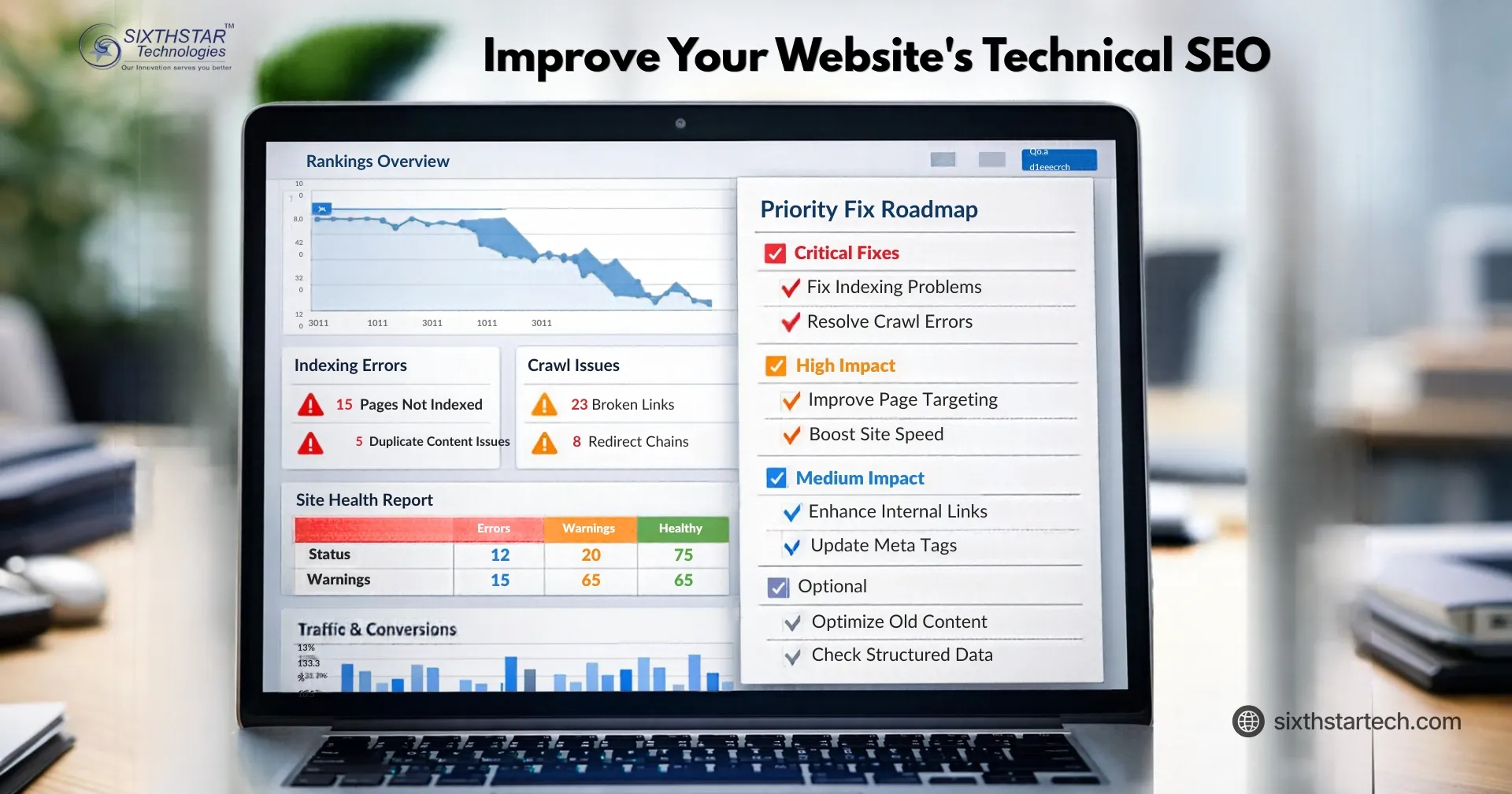 Technical SEO ensures that search engines can access your content and that visitors can use your website effectively. Before making major content changes, identify technical issues that may be limiting performance.
1. Fix crawling, indexing, and canonical issues
Review your robots.txt file to ensure it does not unintentionally block important pages. Check canonical tags to avoid sending conflicting signals about duplicate or similar URLs.
Use an XML sitemap to help Google discover important, indexable pages. Keep it updated when relevant URLs change, and remove URLs that should not be indexed.
Remember that a sitemap is a discovery aid, not a guarantee that every submitted URL will appear in Google Search.
2. Improve mobile usability
Your website should display properly on mobile devices, with readable text, sensible spacing, functional navigation, and accessible buttons.
Test important pages on different screen sizes. Look for content that overflows the screen, intrusive pop ups, and forms that are difficult to complete.
3. Monitor Core Web Vitals
Google's Core Web Vitals guidance explains three measures of user experience:
Metric | What it measures | Good target |
Largest Contentful Paint (LCP) | Loading performance | 2.5 seconds or less |
Interaction to Next Paint (INP) | Responsiveness | 200 milliseconds or less |
Cumulative Layout Shift (CLS) | Visual stability | 0.1 or less |
These are Google's published good thresholds, evaluated at the 75th percentile of page visits. You can review them using PageSpeed Insights and available field data.
If a page loads slowly, investigate large images, unnecessary JavaScript, server response times, and render blocking resources. Prioritise changes based on actual test results rather than installing optimisation tools without identifying the problem. Learn more through Google PageSpeed Insights.
6. Build Relevant Backlinks and Brand Credibility
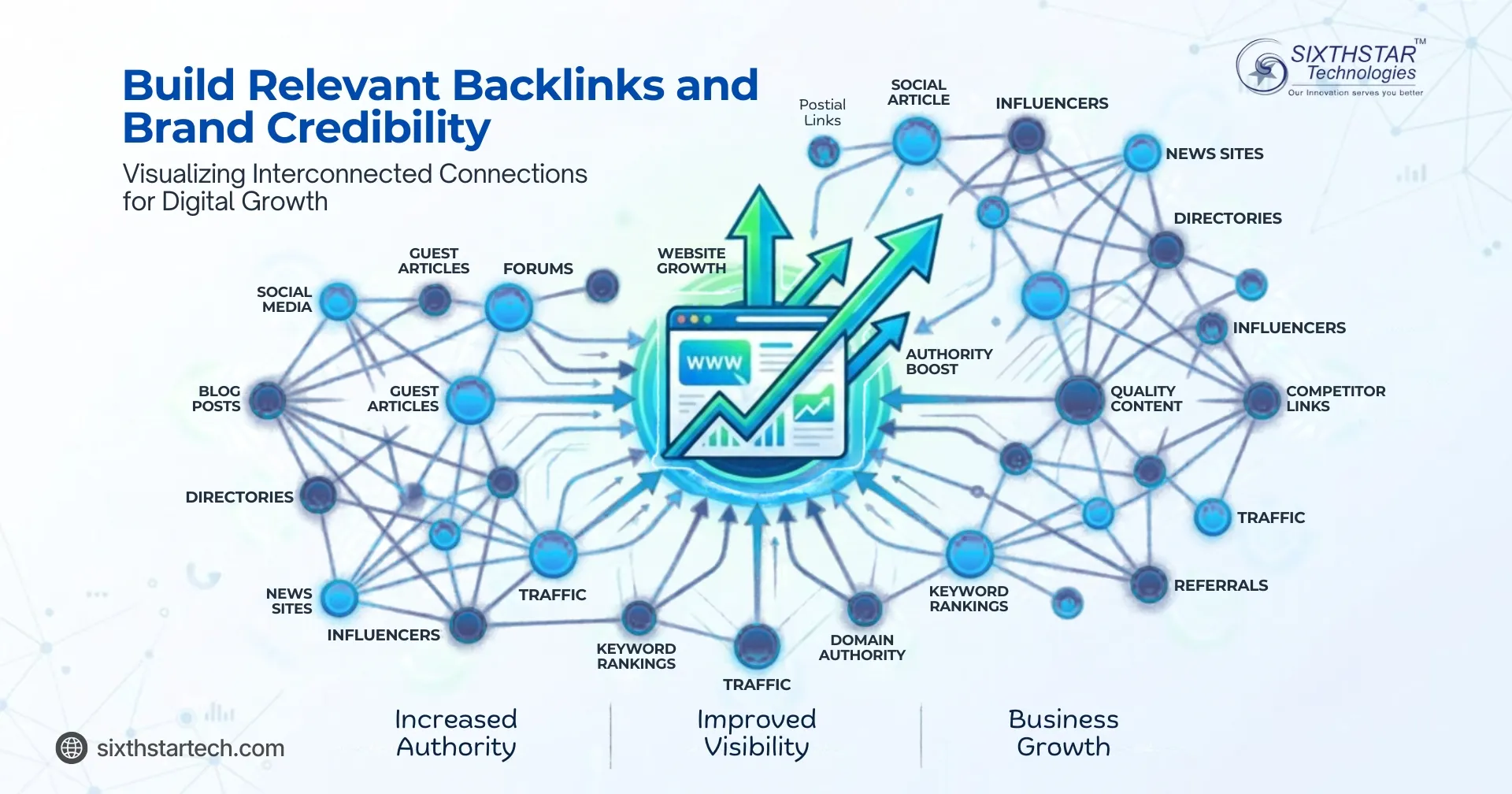 Backlinks are links from other websites to your content. Relevant editorial links can help search engines discover pages and introduce your website to new audiences.
However, not every backlink provides the same value. A link from a relevant publication that genuinely references your work is different from a link created solely to manipulate search rankings.
1. Earn links by publishing useful resources
Create content that other publishers have a reason to reference. Depending on your industry, this could include original research, technical documentation, practical guides, detailed comparisons, or case studies based on real customer experiences.
Other legitimate approaches include contributing expert commentary to relevant publications, participating in industry communities, and maintaining accurate business or software profiles where appropriate.
2. Avoid manipulative link building
Do not buy links intended to pass ranking credit, generate automated backlinks, or participate in excessive link exchanges.
Google's spam policies identify link schemes and other practices that can lead to lower rankings or exclusion from search results.
The objective is not to collect the largest number of links. Build relationships and resources that deserve to be referenced.
7. Strengthen Internal Linking and Topical Authority
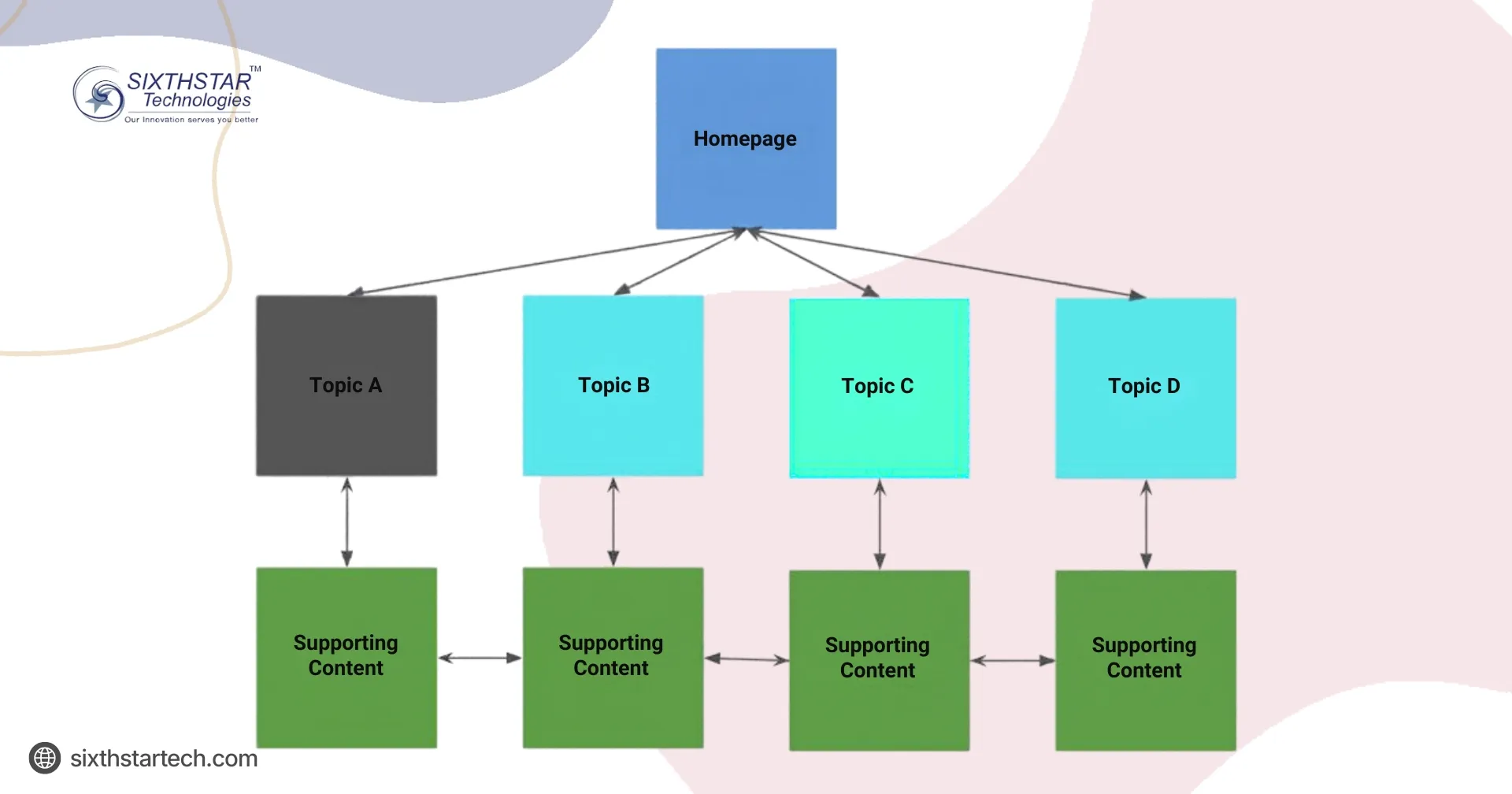 Internal links connect one page on your website to another. They help visitors discover related information and allow search engines to find additional pages and understand relationships between them.
A well organised website often has a main resource supported by more specific articles.
For example, a website publishing SEO education could connect a main guide about website rankings to supporting articles about keyword research, technical SEO, content optimisation, and backlink analysis.
Create a logical content structure
Group related articles by subject rather than publishing isolated posts without connections.
Use descriptive anchor text that tells readers what they will find on the linked page. Avoid using the same exact match keyword as anchor text for every link.
Review older articles to identify opportunities for relevant internal links to newer resources. Also check for important pages that receive few internal links or cannot be reached easily through navigation.
Topical authority is not a single score or a guaranteed ranking advantage. It is a useful content strategy for demonstrating depth, helping users explore a subject, and making your website's structure clearer.
8. Demonstrate Experience, Expertise, Authoritativeness, and Trustworthiness
E E A T stands for Experience, Expertise, Authoritativeness, and Trustworthiness. Google's quality guidance uses these concepts to help assess the characteristics of reliable, helpful content. E E A T itself is not a single direct ranking factor.
1. Show readers who created the content
Include an accurate author name and link to a genuine author profile where appropriate. Explain the author's relevant experience and expertise without inventing qualifications.
For technical subjects, have knowledgeable practitioners review recommendations when possible. If the article includes a real implementation example, explain what was done, why it was done, and what the evidence shows.
2. Support claims with trustworthy evidence
Use official documentation when explaining how search tools and technical features work. Distinguish verified facts from recommendations and opinions.
For example, Google's SEO Starter Guide is an appropriate source for explaining foundational optimisation practices.
If you publish case studies, use actual project information and obtain permission to disclose customer details. Do not invent traffic growth, ranking improvements, testimonials, or performance figures to make the content appear more authoritative.
3. Keep business information accurate
Make it easy for visitors to understand who operates the website, what services are offered, and how to contact the organisation. Maintain accurate company details and explain relevant policies where applicable.
These practices help readers evaluate your credibility and make more informed decisions.
9. Measure SEO Performance Using Real Data
SEO improvements should be evaluated using actual website data. Rankings can vary by query, location, device, and search context, so checking a single keyword manually does not provide a complete picture.
1. Use Google Search Console
Google Search Console provides information about search impressions, clicks, click through rate, average position, indexing, and other search performance details.
Review the data by page and query to identify what needs attention.
What you observe | What to investigate |
Impressions are increasing, but clicks are limited | Review the search intent, title, and snippet relevance |
A page receives impressions for unrelated queries | Improve its focus and clarify the content |
Important pages are not indexed | Investigate crawling, indexing, and canonical signals |
Organic traffic arrives but enquiries remain low | Review audience relevance, page clarity, and conversion paths |
Rankings fluctuate after content changes | Compare date ranges and query data before deciding what to change |
2. Use analytics to understand visitor behaviour
Google Analytics can help you evaluate what visitors do after reaching your website, provided the relevant tracking is configured correctly.
For a business website, useful outcomes might include completed enquiry forms, qualified leads, purchases, or other meaningful actions. More visits are not necessarily better if those visitors are unlikely to benefit from your services.
When considering how to improve website Google ranking, use these insights to prioritise changes that support both search visibility and business objectives.
10. Follow a Practical 30 Day SEO Action Plan
A structured plan makes it easier to focus on the issues that matter most instead of changing everything at once.
Week 1: Audit your website
Inspect priority pages in Google Search Console. Check indexing, titles, headings, internal links, sitemap coverage, and obvious technical problems. Record baseline performance so you can compare results later.
Week 2: Improve important content
Choose pages that are relevant to your audience and have clear improvement opportunities. Strengthen explanations, correct outdated information, improve titles, and fill meaningful content gaps.
Do not rewrite every page simply because it is old. Make changes when they improve accuracy, usefulness, clarity, or search intent alignment.
Week 3: Improve website structure and credibility
Add relevant internal links, improve navigation, and publish or refine resources that demonstrate genuine expertise. Identify legitimate opportunities for industry mentions and editorial links.
Week 4: Review performance
Compare search performance with your baseline. Look for changes in impressions, clicks, query relevance, indexing status, and conversions.
Some improvements may take longer than a month to become visible. Continue monitoring rather than treating the 30 day period as a deadline for achieving a particular ranking.
Improve Your Google Rankings with the Right SEO Strategy
Getting your website to the top of Google requires the right combination of technical SEO, helpful content, keyword optimisation, and a strong website structure. By identifying ranking issues and implementing proven SEO practices, you can improve search visibility and attract more relevant visitors to your website.
At Sixthstar Technologies, we understand the importance of building a website that supports your business goals. Our SEO services focus on improving website visibility, optimising website content, resolving technical SEO issues, and strengthening search engine performance to help your business attract relevant organic traffic and build a stronger online presence.
Ready to strengthen your website's search performance? Contact Sixthstar Technologies to discuss your website requirements and find the right solutions for your business.
Frequently Asked Questions
1. How can I get my website to the top of Google?
Focus on keyword research, helpful content, technical SEO, relevant backlinks, and a user friendly website. Monitor your performance through Google Search Console and regularly improve pages based on actual search data.
2. How long does it take to rank a website on Google?
SEO results vary depending on competition, website condition, content quality, and your optimisation strategy. Some changes may show results within weeks, while achieving competitive rankings can take several months or longer.
3. How can I improve my Google ranking without paying for ads?
You can improve organic rankings through keyword optimisation, useful content, internal linking, technical SEO improvements, and earning relevant backlinks. Google Search Console and Google Trends offer free resources to support these efforts.
4. Why is my website not appearing on Google?
Your website may have indexing problems, technical errors, weak content relevance, or strong competition. Use Google Search Console's URL Inspection tool to check whether important pages are indexed and identify potential issues.
5. Do backlinks help improve website rankings on Google?
Relevant, trustworthy backlinks can help search engines discover your content and support your website's credibility. Focus on earning genuine links from relevant websites rather than buying links or using automated link building schemes.
6. Can SEO services help my website rank higher on Google?
Professional SEO services can help identify technical issues, improve website content, research relevant keywords, strengthen internal linking, and develop a sustainable optimisation strategy. However, no SEO provider can guarantee a specific Google ranking.
About the Author
Gunal
A passionate writer and tech enthusiast sharing insights and knowledge on the latest trends and innovations.
Elevate Your Digital Presence
Have a question or feedback? Reach out to our experts today and discover how we can help you grow.
